Aug 3, 2026
10 Most Popular Latin American Dishes and Their Origins
Latin American cuisine did not start in a restaurant kitchen. It started in cornfields, coastal villages, colonial convents...
Read More
When someone says “comida latina,” they mean more than food. The phrase points to generations of tradition passed down through family kitchens. It also points to old cooking techniques that survived centuries. And it carries flavors that hold the weight of an entire culture’s history. Comida latina translates directly to “Latin food.” Yet it represents one of the most diverse and richly layered culinary traditions on the planet.
At Suy’s Mexican Restaurant, we believe every bowl of soup tells a story. So does every warm tortilla and every carefully prepared plate. That story belongs to Latin America, its people, and their deep bond with food as a form of love, community, and identity.
This guide takes you deep into the world of Latin food culture. You will learn what comida latina truly means and where it comes from. You will also learn what makes it so unique, and why so many people across Tampa and the wider United States fall in love with authentic Latin flavors every day.
“Comida latina” is Spanish for “Latin food.” But the meaning goes far beyond a simple translation. It refers to the shared food traditions of Latin American countries, including Mexico, Guatemala, El Salvador, Honduras, Colombia, Peru, and Cuba.
Each country brings its own distinct culinary identity to the table. Even so, they all share common threads that weave the larger tapestry of Latin food culture together. Corn, beans, rice, and chili peppers form the backbone of most Latin kitchens. So do cooking methods that indigenous civilizations built thousands of years before European contact.
When you sit down to enjoy comida latina, you take part in something ancient and alive. It is not a frozen tradition. Rather, it keeps growing and changing while staying rooted in its origins.
Latin food is also deeply communal. Families rarely eat it alone or in a hurry. Instead, they share it at a long table surrounded by relatives and friends. The meal becomes the reason to gather. In turn, the gathering gives the meal its full meaning.
To truly understand comida latina, you need to know where it comes from. Latin American food draws from three main historical sources. Over centuries, these sources blended together into the food we enjoy today.
Long before European explorers reached the Americas, indigenous civilizations had already built advanced farming systems. The Aztec, Maya, Inca, and countless other groups grew crops that would go on to change eating habits around the world.
Corn, or maize, formed the foundation of indigenous Latin American diets. Cooks ground it into masa to make tortillas, tamales, and porridges. Beans provided protein and grew alongside corn using a farming method called the Three Sisters. Chili peppers added heat, but more importantly, they worked as complex flavor agents. Cooks dried, smoked, toasted, or ground them into pastes.
Tomatoes, squash, avocado, cacao, and vanilla now fill kitchens worldwide. So do dozens of other ingredients first grown by Latin American indigenous peoples. This gift to global food culture cannot be overstated.
When Spanish settlers arrived in the 16th century, they brought an entirely new set of ingredients. Pork, beef, chicken, dairy, wheat, onions, garlic, rice, and various Old World spices entered Latin American cooking for the first time.
The blend of indigenous ingredients and European imports proved creative and lasting. Indigenous cooks worked new ingredients into their existing methods. Spanish settlers, in turn, adopted local ingredients and techniques into their own cooking. Neither purely indigenous nor purely European, the result became something entirely unique.
Menudo, for example, stands as one of the most iconic soups in Mexican cuisine. It uses beef tripe, a cut that arrived with Spanish cattle ranching. Yet cooks season, prepare, and serve it with fresh onions, cilantro, and warm tortillas in a way that stays entirely rooted in Mexican tradition.
The transatlantic slave trade brought millions of people from across Africa to Latin America. Enslaved Africans carried their own food traditions, ingredients, and techniques with them. This influence shaped coastal and Caribbean Latin American cuisines especially strongly. As a result, tropical ingredients, slow cooking, and complex spice blends became deeply woven into local food culture.
Understanding comida latina means understanding the ingredients behind it. These ingredients are not just food items. They stand as cultural symbols with real weight in Latin American communities.
Corn is the heartbeat of Latin food culture. In Mexico, corn represents far more than an ingredient; it stands as a sacred part of life and identity. Indigenous civilizations developed nixtamalization over 3,500 years ago. This process soaks dried corn in an alkaline solution to boost its nutrition and create a workable dough called masa.
From masa comes the tortilla, one of the most useful parts of Mexican and Central American cuisine. A warm, freshly made corn tortilla can scoop up soup, wrap around grilled meat, or stand on its own with a little salt.
At Suy’s Mexican Restaurant, our tortillas arrive fresh alongside every dish. The tortilla is not a side item here. Instead, it forms an essential part of the entire eating experience. Browse how our tortillas pair with dishes like our tacos on our full menu.
Rice is the great equalizer of Latin American cuisine. It appears on nearly every plate in every Latin American country, though each region prepares it a little differently. In Mexican cooking, cooks typically toast rice in oil before adding liquid. This step gives the rice a slightly nutty flavor and a reddish-golden color from tomatoes and spices.
Rice serves several purposes in a Latin meal. It soaks up flavorful broths and adds substance to lighter dishes. It also provides a mild, comforting base that balances the bolder flavors found in soups and stews.
Cilantro and onion show up again and again in Latin food culture, and for good reason. Together, these two ingredients create brightness against rich, deeply flavored dishes. Cooks almost always serve them fresh, not cooked, so their sharpness can cut through heavy broths and fatty meats.
In traditional Mexican cooking, fresh white onion and cilantro on the side of a soup bowl are not a garnish. Rather, they form a basic part of the dish. You stir them into your bowl yourself, letting them soften slightly in the hot broth while still keeping their raw bite.
Latin food culture is incredibly broad, but Mexican cuisine holds a particularly important place within it. Mexico’s food traditions run so rich and complex that UNESCO recognized Mexican cuisine as an Intangible Cultural Heritage of Humanity in 2010. This honor covers more than the food itself. It also covers the knowledge, rituals, and social practices around it.
Mexican food centers on a handful of deeply traditional dishes that cooks have made for centuries. Soups and broths hold a place of special honor in Mexican culinary tradition. They represent warmth, healing, and care.
In Latin food culture, soup functions as medicine, and this is not just a figure of speech. Across Latin America, families make and eat soup with one clear goal: to nourish, restore, and heal the body. After illness, after childbirth, after hard physical labor, and on cold mornings, Latin soup is what families turn to first.
This belief runs deep in Latin culture, and the recipes themselves back it up. Long-cooked bone broths, mineral-rich organ meats, fresh vegetables, and aromatic herbs combine to create dishes that genuinely heal.
At Suy’s Mexican Restaurant, our soup menu directly reflects this tradition. We prepare soups that taste delicious and nourish the body. Each one gets made with care and served the traditional way.
Soup plays such a central role in comida latina that it deserves a closer look. Below, we walk through the two signature soups we serve at Suy’s Mexican Restaurant. These are not just menu items. They are cultural experiences in a bowl.
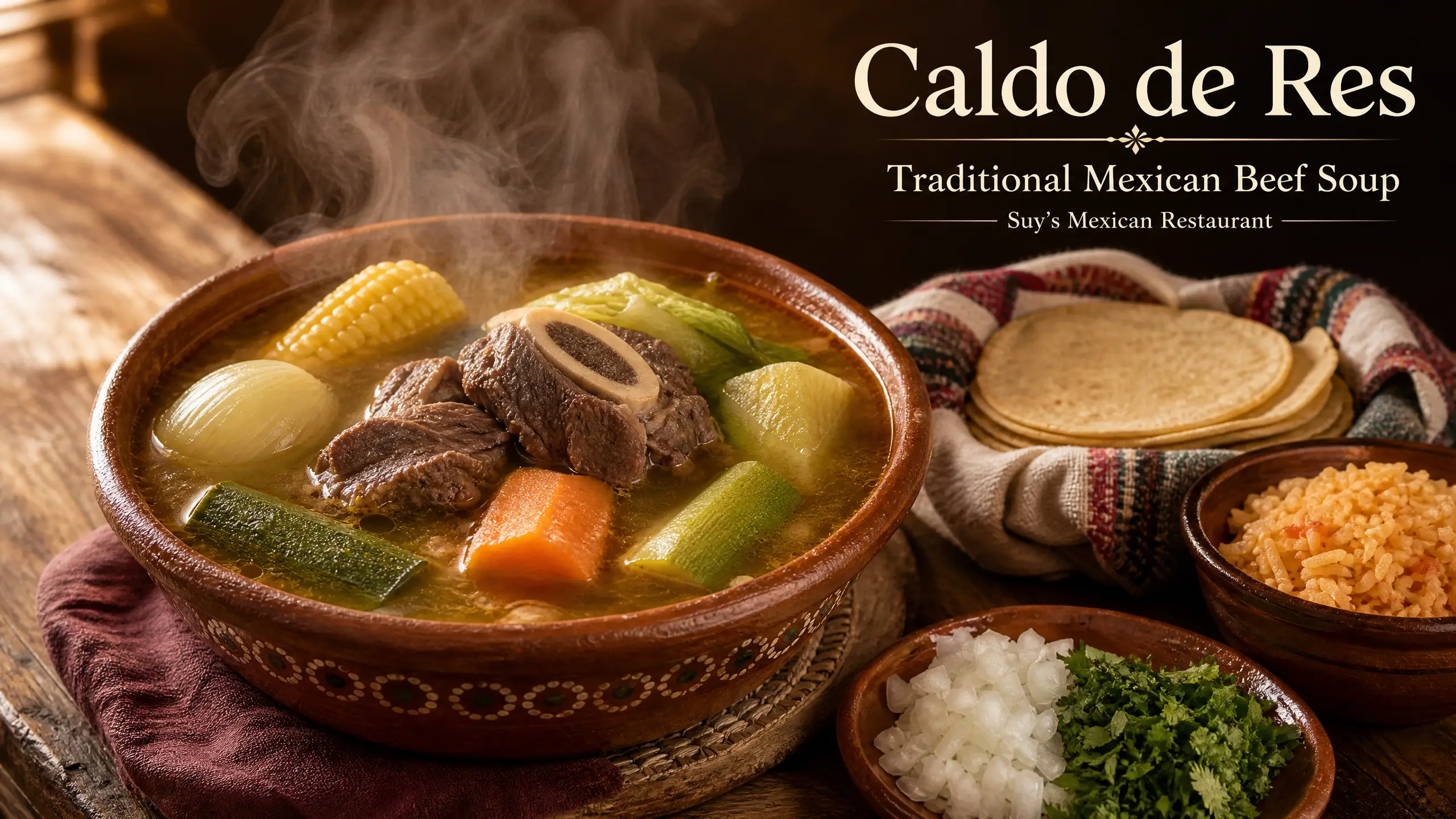
Caldo de Res translates directly to “beef broth” or “beef soup.” It ranks among the most beloved soups in all of Mexican cuisine. Cooks slow-simmer beef bones and meat for hours. Over that time, the broth turns rich and full-bodied, layered with savory depth.
The beef used in Caldo de Res is typically bone-in. As it cooks for hours, the marrow inside the bones slowly melts into the broth. As a result, the soup gains a deep, silky texture that boneless cuts simply cannot match.
At Suy’s Mexican Restaurant, we prepare our Caldo de Res with tender short ribs, corn, carrots, potatoes, and cabbage. Then we serve it in the traditional way. A generous bowl arrives at your table alongside fresh white onion, chopped cilantro, warm corn tortillas, and a serving of well-seasoned Mexican rice. Cooks have served this soup this exact way in Mexican homes for generations.
The side items play a key role here. Once stirred in, fresh onion and cilantro soften slightly in the hot broth. They add a bright, sharp contrast to the deep, savory richness of the soup. Tortillas double as eating tools and as a way to soak up the broth at the bottom of the bowl. Meanwhile, the rice adds heartiness and a mild, comforting balance.
Caldo de Res is the kind of soup that makes you feel cared for. Mexican grandmothers make it when someone falls sick. Workers eat it after a long morning of hard labor. In its most honest form, it is comfort food that genuinely nourishes.
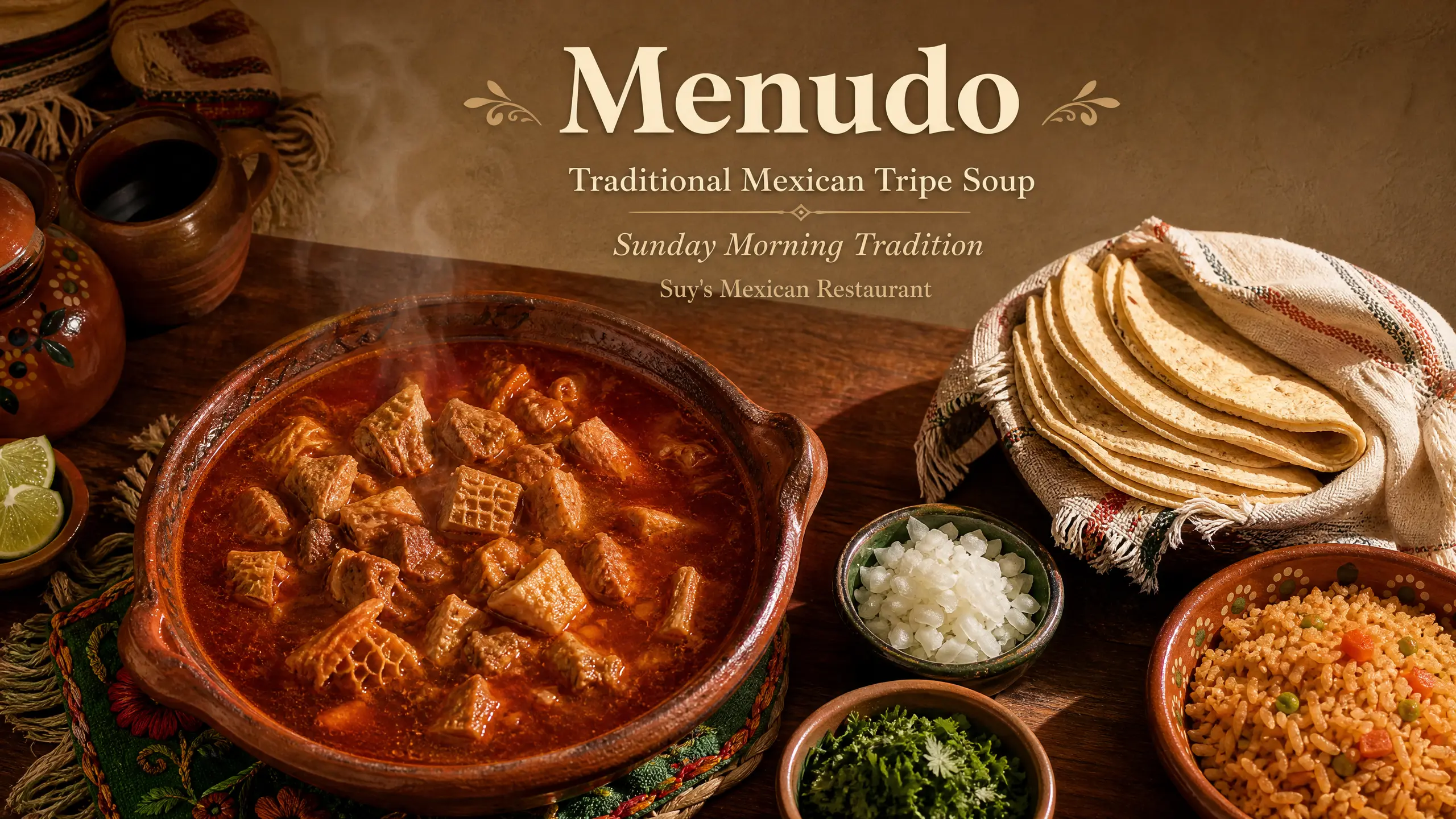
Menudo is one of those dishes that divides people right away. People who grew up eating it hold it in almost sacred regard. First-timers sometimes hesitate once they learn what it contains. But anyone who gives it a genuine chance almost always becomes a devoted fan.
This traditional Mexican soup starts with beef tripe, the lining of the cow’s stomach, often called the cow belly. Cooks slow-cook the tripe in a deeply flavored broth with dried red chilies, garlic, onion, and a complex blend of spices. Over several hours, the tripe turns tender and soaks up the rich flavors around it.
The result is remarkable: a broth that runs deeply red, complex, slightly spicy, and intensely savory. Properly cooked tripe carries a soft, slightly chewy texture and a mild flavor, unlike anything else in Mexican cooking.
Menudo carries real cultural weight in Mexican society. Its famous reputation as a hangover remedy has turned its weekend serving tradition into something of a ritual. Families gather for it on Sunday mornings, and church groups gather after services. Quinceañera celebrations and other community events often feature it too, as a central dish.
At Suy’s Mexican Restaurant, we prepare our Caldo de Menudo with great care and respect for the traditional recipe. We serve it with fresh white onion, chopped cilantro, warm corn tortillas, and a side of Mexican rice. These extras are essential parts of the meal, not afterthoughts.
Beyond our signature soups, Suy’s Mexican Restaurant offers a complete menu of authentic Latin and Mexican dishes. Together, they reflect the full richness of comida latina. We prepare every item with traditional techniques and fresh, quality ingredients.
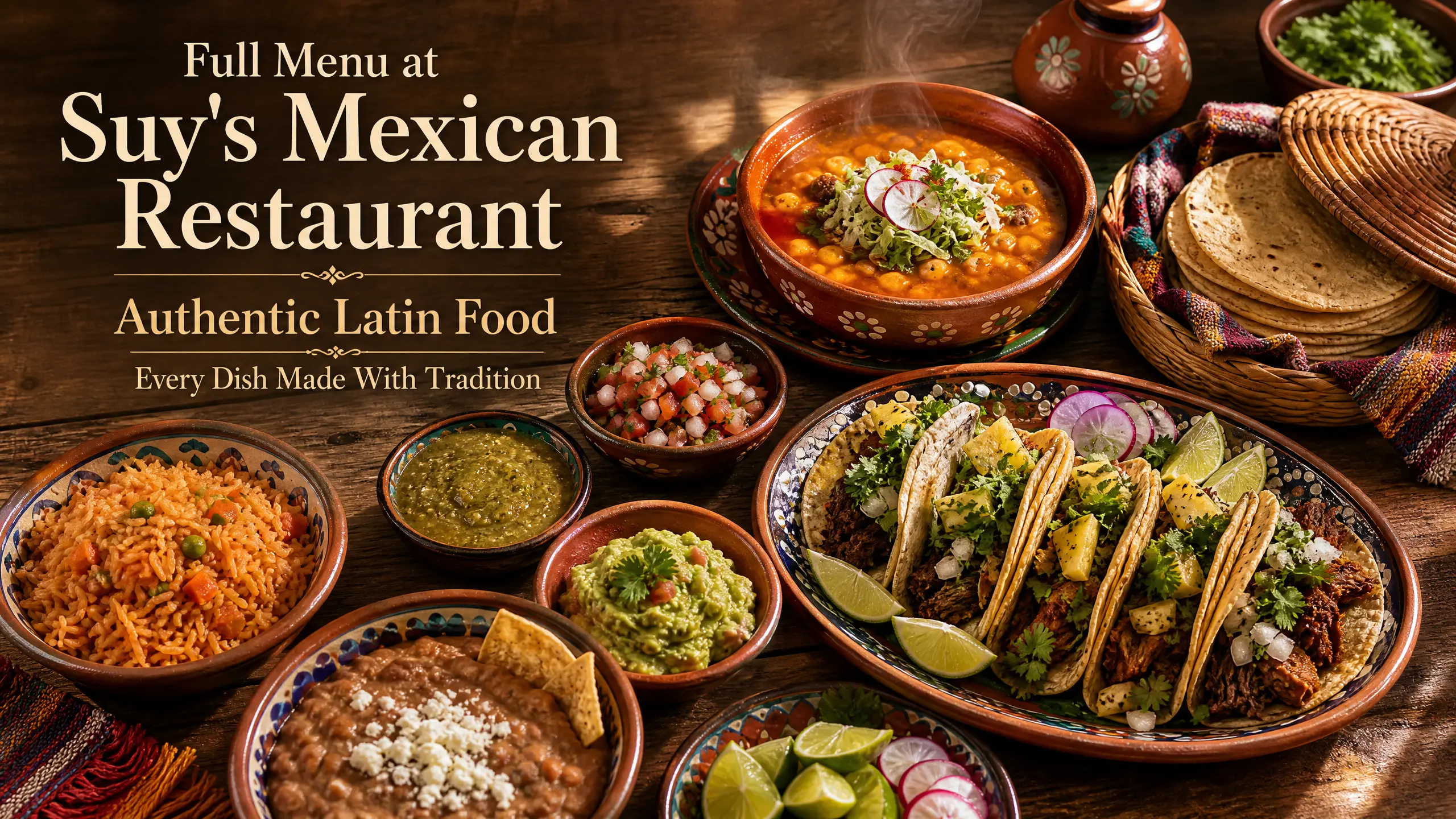
Our menu spans several categories. Each one stands as a core pillar of traditional Mexican and Latin cuisine.
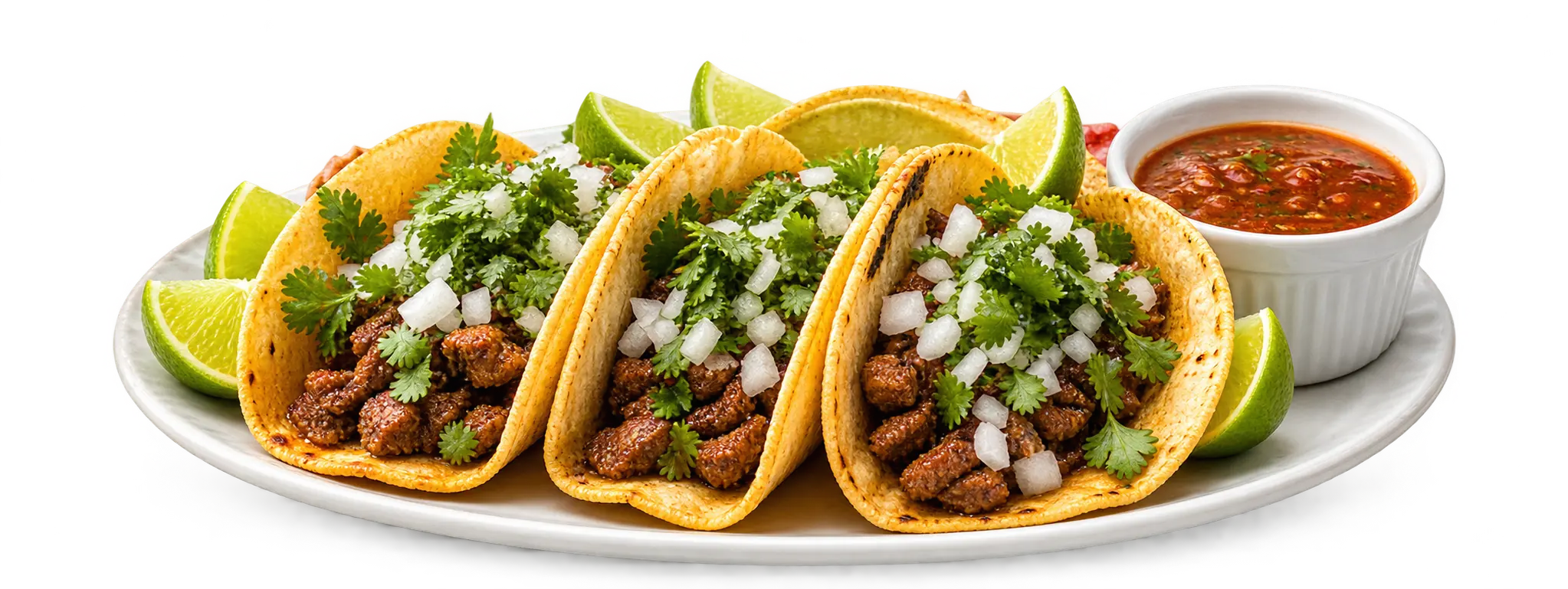
Tacos stand among the most iconic parts of Mexican street food culture. At Suy’s, our tacos come on warm corn tortillas, filled with your choice of birria, carne asada, al pastor, shrimp, or chicken. A well-made taco keeps things simple: fresh tortilla, quality protein, fresh toppings, nothing extra. Every Tuesday, our Taco Tuesday deal gets you the third taco free.
The burrito delivers a satisfying, fully wrapped meal in a large flour tortilla. Our burritos come generously filled with seasoned meat, rice, beans, and fresh toppings. This dish continues a Mexican tradition: building complete, filling meals in a portable format that sustains workers through long days.
The quesadilla ranks among the simplest and most beloved dishes in Mexican cuisine. Melted cheese gets folded inside a toasted tortilla, combined with your choice of filling. The result feels comforting and deeply rooted in Mexican home cooking. At Suy’s, our quesadillas come with eleven filling options, grilled fresh to order.
Enchiladas take corn tortillas, roll them around a savory filling, and cover them in flavorful chili sauce. This dish shows how indigenous Mexican ingredients and Spanish cooking traditions combined into something entirely new. You’ll find enchiladas paired with a taco, rice, and beans on our lunch specials menu.
Tamales rank among the oldest foods in Mexican culinary tradition, with roots stretching back thousands of years. Cooks wrap masa around a savory filling, then steam it inside a corn husk. The result makes our tamales both a culinary achievement and a symbol of shared effort and celebration.
The torta is the Mexican answer to the sandwich, built on a crusty bolillo roll and filled with meats, cheeses, and fresh toppings. It reflects the mark European bread-making left on Mexican cuisine, while staying distinctly Mexican in flavor. Try our asada, birria, or milanesa tortas any day of the week.
Beyond the classics, our menu features several other traditional masa-based dishes. Our sopes start with a thick corn base topped with beans, meat, and fresh toppings. Our gorditas stuff a pocket of masa with your choice of filling. For something lighter, try our bowls, which layer rice, beans, and protein without the tortilla. Our huaraches top an oblong masa base with beans, meat, and salsa.
For heartier plates, we grill our Carne a la Plancha fresh on a hot flat-top every day. Our steak fajitas arrive sizzling with peppers, onions, rice, beans, and warm tortillas. If you prefer something crispy, our chimichangas deep-fry a burrito stuffed with seasoned chicken or beef, topped with sour cream and guacamole.
Our flautas roll seasoned meat inside crispy tortillas, finished with crema, queso fresco, and lettuce. For mornings, our Desayunos Breakfast menu covers chilaquiles, huevos rancheros, and chorizo eggs, all made the traditional way.
No Latin meal feels complete without its extras. Our sides include freshly made rice, whole or refried beans, warm tortillas, and traditional salsas. Meanwhile, our Aguas Frescas and Bebidas Drinks offer horchata, hibiscus, and Mexican sodas to round out any meal. To finish, our desserts menu covers churros, elotes, esquites, and our signature chocolate-drizzled fried ice cream.
Explore every item across all categories on our full menu page. Take your time browsing, because every dish has a story worth knowing.
One key thing to understand about comida latina: it is not one thing. It is many things, and it varies a great deal from country to country. It even varies from region to region within the same country.
Mexican cuisine alone contains dozens of distinct regional traditions. The food of Oaxaca looks very different from the food of Yucatan. Veracruz cooking leans on strong Spanish and African influences plus plenty of seafood. It bears little resemblance to the chili-forward dishes of Puebla, the region that gave the world mole and chiles en nogada.
Central American cuisines from Guatemala, El Salvador, Honduras, and Nicaragua share some traits with Mexican food. Still, they hold their own distinct identities. South American cuisines from Colombia, Peru, Argentina, and Brazil diverge even further, each shaped by unique geography, indigenous traditions, and waves of immigration.
This diversity stands as one of the great strengths of Latin food culture. No single, uniform Latin food exists. Instead, an enormous variety of culinary traditions connects through shared history and common ingredients, yet each one expresses itself in a different way.
Latin food culture has left a lasting mark on American dining. Mexican food, in particular, has become one of the most popular cuisines in the United States. Today, Mexican restaurants appear in cities and towns across the country.
The influence of Latin food goes beyond restaurant counts, though. Latin ingredients and flavors have become deeply woven into everyday American cooking. Avocados, once unknown to most Americans before the late 20th century, now rank among the most popular foods in the country. Cilantro shows up on menus everywhere, and chili peppers of every kind have become staple items in American home kitchens.
According to the National Restaurant Association, Mexican food consistently ranks among the top three most popular ethnic cuisines in the United States. This popularity reflects more than a passing trend. It shows a genuine, deep love for the flavors, traditions, and cultural richness that comida latina represents.
Restaurants like Suy’s Mexican Restaurant serve not just the Latino community but also the wider Tampa public that craves genuine, traditional Latin flavors. We are proud to be part of this exchange, serving our community with food that stays authentic and made with real care.
Food in Latin culture rarely centers on nutrition or flavor alone. It carries identity, connection, memory, and belonging. Understanding this cultural side matters, because it shapes what comida latina truly means.
In Latin American families, the kitchen often becomes the most important room in the house. Family members gather there not just to eat, but to talk, share stories, and pass down knowledge. Recipes are rarely written down. Instead, people learn them by watching, tasting, and helping. This knowledge lives on in the hands and memories of the cooks who carry it forward.
This hands-on way of passing down knowledge means every family’s version of a dish like Menudo or Caldo de Res differs slightly. Each version reflects the tastes and techniques of the cook behind it, passed across generations. No single correct recipe exists. Hundreds of thousands of variations do, and each one is authentic in its own right.
Food also plays a central role in Latin American religious and cultural celebrations. From Dia de los Muertos to Christmas, and from quinceañeras to baptisms, food sits at the center of the celebration. Cooks prepare specific dishes for specific occasions. The preparation itself becomes a form of ritual and remembrance.
When you eat at a restaurant like Suy’s Mexican Restaurant, you connect with this broader cultural tradition, even if you did not grow up within it. Good food crosses cultural boundaries. It can make you feel something real that goes beyond language and background.
The line between authentic Latin food and Americanized versions comes up often among food lovers. Americanized versions are not inherently bad; they represent a natural process of cultural adaptation. Tex-Mex, for example, blends Mexican culinary traditions with Texas ranch cooking into a genuinely delicious cuisine of its own.
Still, real differences exist between Americanized Latin food and traditional preparations. Those differences matter to people who want a genuine experience.
Authentic Latin food tends to use simpler ingredients prepared with greater care. It leans on technique over complexity. Long cooking times, fresh herbs, and high-quality proteins build deep flavor, rather than heavy sauces or extra additions.
Traditional Mexican soups like our Caldo de Res and Caldo de Menudo cannot be rushed. They need hours of slow cooking to build their signature depth. The fresh onion and cilantro on the side are not flavor substitutes, either. Rather, they act as extras the diner controls, adding brightness at the moment of eating.
At Suy’s Mexican Restaurant, we commit to authentic preparation. We skip shortcuts and cook our food the way it has always been made. That is the only path to the flavors and textures that make comida latina so special.
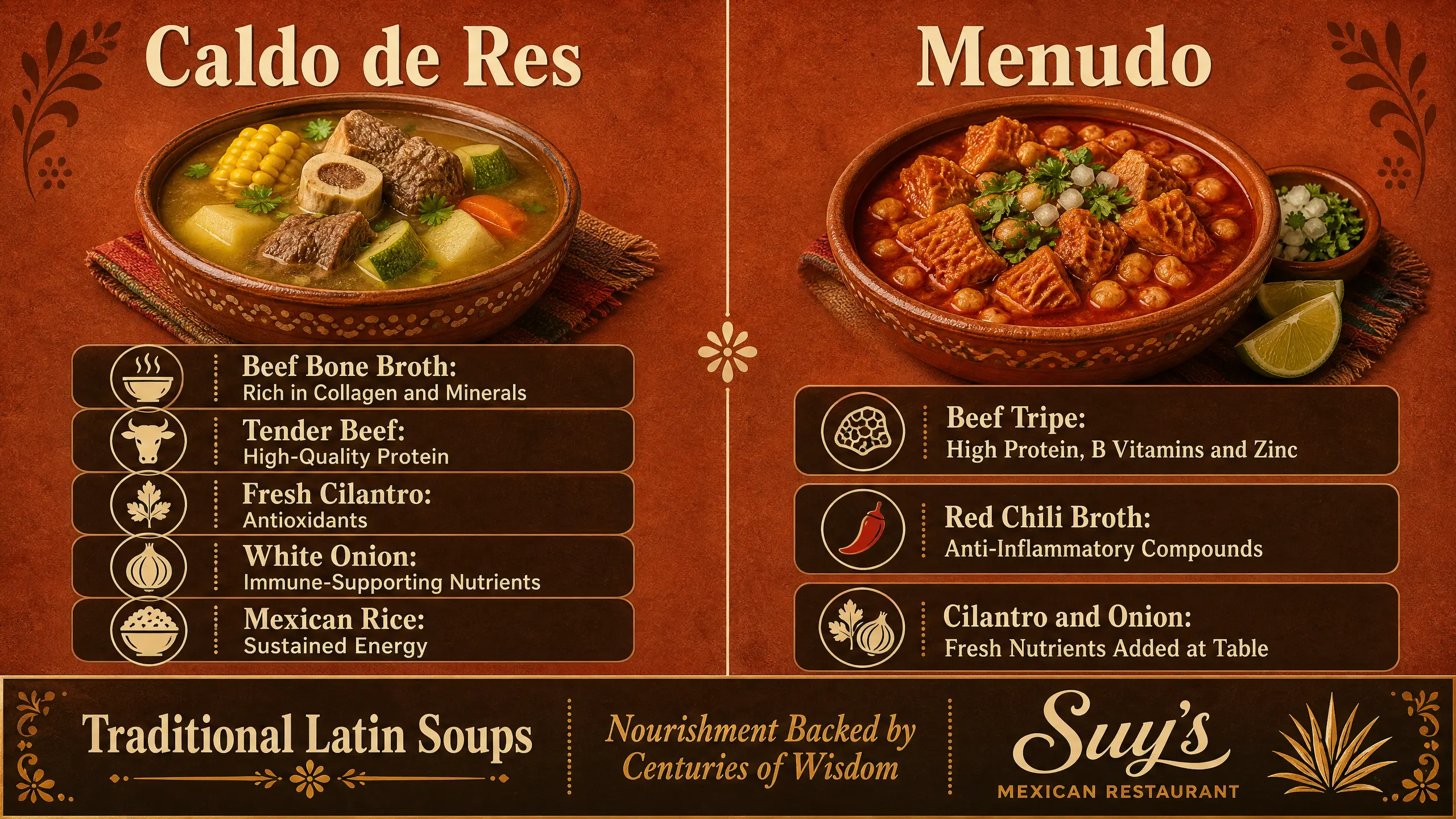
Beyond their cultural weight and rich flavor, traditional Latin soups offer real nutritional benefits. Modern ideas about healthy eating line up with them well.
Bone broth, the base of Caldo de Res, is known for its high collagen content and rich mineral profile. It also supports gut and joint health. Nutritional scientists are now discovering something Latin grandmothers have known for centuries: long-cooked bone broth is genuinely good for you.
Beef tripe, the main ingredient in Menudo, delivers high-quality protein. It also stands rich in B vitamins, zinc, and selenium. Organ meats have fallen out of fashion in mainstream American cooking. Yet traditional cuisines worldwide have always valued them for their nutritional density.
Fresh cilantro served alongside these soups adds meaningful antioxidants. Research also links it to digestive health. White onion, meanwhile, contains compounds that support immune function.
Rice rounds out the bowl with easily digestible carbs that give the body energy. Together, these parts form a complete, balanced meal, one that nourishes the body the way traditional Latin cooks have always intended.
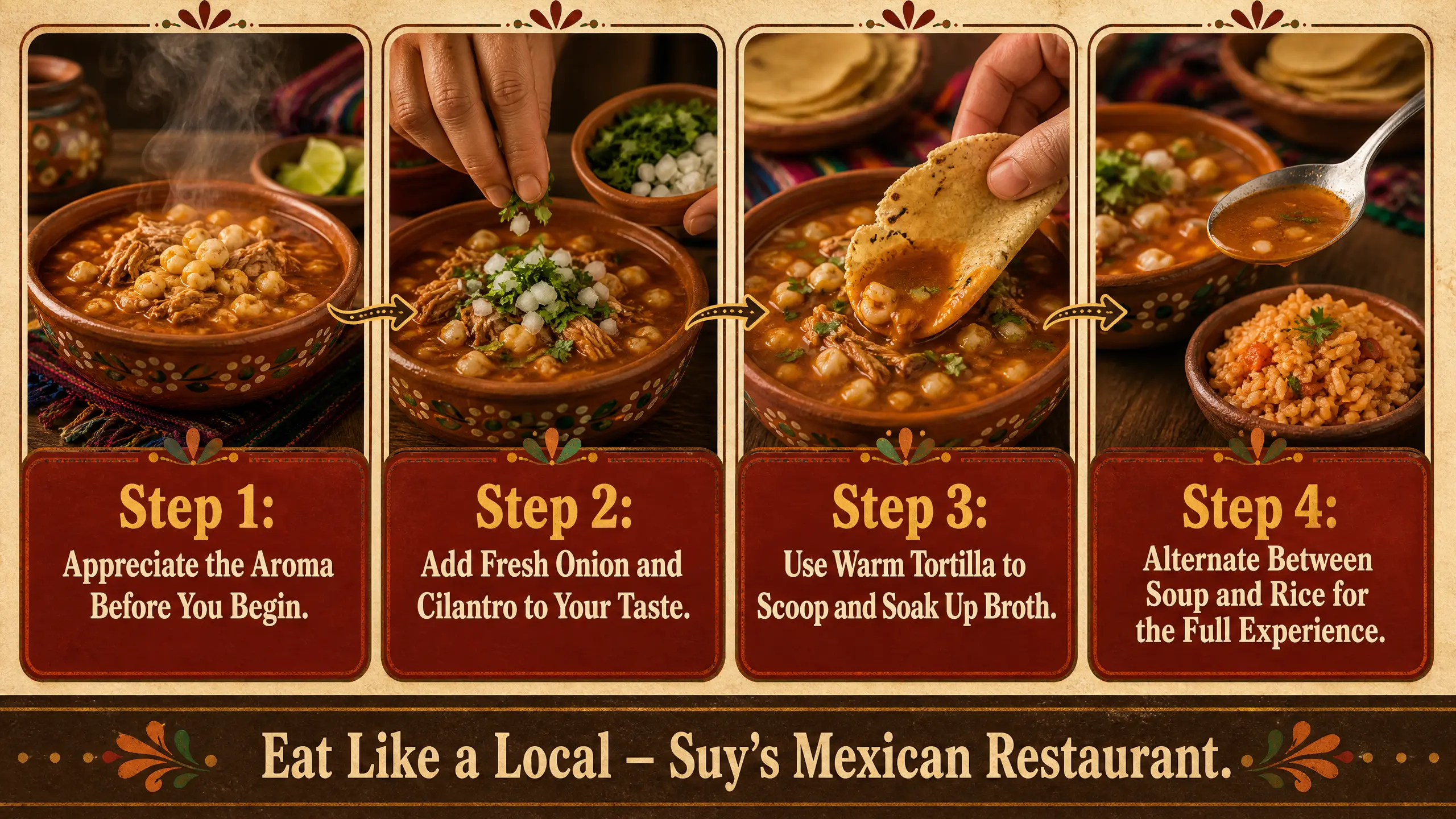
No single correct way to eat any food exists, and enjoyment always comes first. Still, a few traditional habits genuinely improve how you experience dishes like Caldo de Res and Menudo.
When your bowl arrives, pause and take in the aroma before doing anything else. Traditional Mexican soups smell deeply fragrant. That smell tells you something about the care that went into making it.
Next, season your soup to your own taste. We place the fresh onion and cilantro on the side so you can control how much you add. Start with a small amount of each. Then stir it gently into the hot broth. The heat softens the onion and cilantro slightly, while keeping them bright and fresh.
Use your tortilla as both an eating tool and an extra part of the meal. Tear off a piece and scoop up meat and broth together. Toward the end, use it to mop up the broth left at the bottom of the bowl. That last bit is often the most concentrated and flavorful part.
Alternate between bites of soup and spoonfuls of rice. This rhythm creates a pleasing contrast. It lets you fully enjoy both the rich, complex broth and the milder, comforting rice.
Finally, eat slowly. Traditional Latin meals are not meant to be rushed, so take your time, enjoy each part, and stay present with the experience.
The search for authentic food has become one of the defining trends of modern dining. Diners increasingly turn away from generic, formulaic food. Instead, they actively seek restaurants that offer real cultural experiences through their cooking.
This desire for authenticity runs especially strong among younger diners. They grew up with access to a huge range of cuisines. As a result, they built sharp palates that can tell the difference between genuine cultural food and a mass-produced version of it.
Searches for terms like “authentic Mexican restaurant near me,” “traditional Latin food,” and “genuine comida latina” have all grown a great deal. This trend has held steady over the past several years. People are not just hungry for food. They are hungry for meaning, connection, and something that feels real.
Restaurants that offer real authenticity, backed by genuine cultural knowledge, sit in a strong position in this environment. At Suy’s Mexican Restaurant, our authenticity is not a marketing claim. It is simply what we do, every day, because it is what we know and care about.
If you are searching for a genuine Latin food experience in Tampa, come in and let the food speak for itself. Find our location, hours, and contact information on our contact page.
Food scholars, chefs, and cultural institutions around the world have long recognized the cultural weight of Latin food.
Diana Kennedy, widely seen as the top authority on traditional Mexican cuisine, spent decades traveling through Mexico to document authentic regional recipes. Her work highlighted the sheer complexity of Mexican food. It also pushed back against watered-down, mass-produced versions of the cuisine.
The late Anthony Bourdain often highlighted the deep cultural richness of Latin food through his television work. He also drew attention to the working-class Latin restaurants in the United States that keep genuine culinary traditions alive without fanfare.
The James Beard Foundation, the most respected culinary institution in the United States, has increasingly recognized Latin American chefs and restaurants. This recognition shows how central comida latina has become to the broader American food scene.
These voices all point in the same direction. Traditional Latin food, prepared with care and respect for its origins, ranks among the most culturally rich food in the world.
Mexican food is one part of the broader category of Latin food. Latin food covers the collective culinary traditions of all Latin American countries, while Mexican food refers specifically to Mexico’s cuisine. Mexican food ranks among the most widely known Latin cuisines in the United States. Still, it represents just one expression of the much larger Latin food tradition.
No. Chili peppers play a central role in many Latin American cuisines, but not all Latin food carries heat. Many dishes use dried chilies for depth without much spice. Others lean entirely on aromatics like onion, garlic, and fresh herbs for their flavor. Spice levels vary a great deal by country, region, and recipe.
Menudo is a traditional Mexican soup made mainly from beef tripe, the lining of the cow’s stomach, also called the cow belly. Cooks slow-cook it in a rich broth seasoned with dried red chilies, garlic, and spices. At Suy’s Mexican Restaurant, we serve our Menudo with fresh onion, cilantro, rice, and warm corn tortillas.
No. Caldo de Res is a beef soup made with beef bones and meat in a clear or lightly seasoned broth. Pozole uses hominy corn in a broth typically flavored with red or green chili sauce. Both count as traditional Mexican soups, but they differ in ingredients, flavor, and cultural context.
In Mexican food culture, rice acts as a staple side to many dishes, including soups. It adds heartiness and a mild, comforting balance to stronger flavors. It also soaks up rich broths in a satisfying way. Serving rice alongside soup reflects the Mexican focus on building a complete, filling meal.
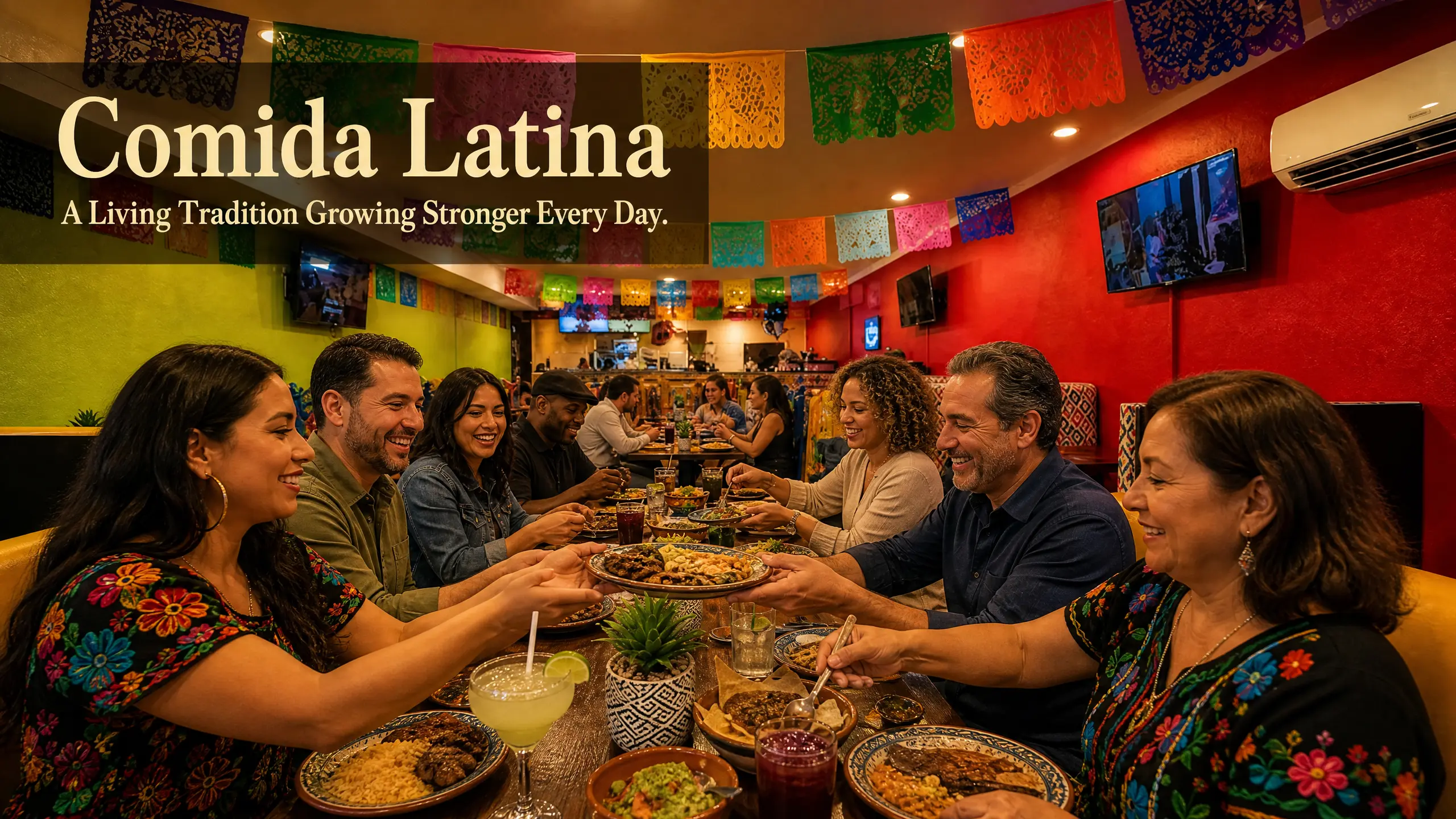
Latin food culture is not static. It keeps evolving, innovating, and growing its influence on American dining.
The next generation of Latin American chefs in the United States is doing fascinating work. They honor traditional techniques and ingredients while exploring new forms of expression. Many introduce Americans to regional Latin cuisines once unknown outside immigrant communities. Through thoughtful, authentic cooking, they tell the stories of their grandmothers’ kitchens without cutting corners on quality.
At the same time, traditional Latin restaurants like Suy’s Mexican Restaurant continue to serve as anchors of real food culture in their communities. These restaurants are where the everyday magic of comida latina lives. Traditional soups get made the same way they always have. The values of warmth, generosity, and community come through in every plate.
As more Americans seek genuine culinary experiences, and as Tampa’s Latino community continues to grow, demand for authentic comida latina will only rise. Restaurants that have always stayed committed to authenticity sit in a strong position to meet that demand.
Real experiences from real guests offer the best proof of what we serve. Here is what people in our Tampa community have shared about dining with us.
“The Menudo at Suy’s is the closest thing to my grandmother’s recipe that I have ever found outside of my own family’s kitchen. It runs deep, rich, and perfectly seasoned. Even the tripe stays tender. Everything about it feels authentic and made with real care.”
“I ordered the Caldo de Res on a cold afternoon and it was exactly what I needed. The broth was incredible, the beef fell apart, and the fresh cilantro and onion on the side gave it the perfect finishing touch. This is real Mexican food.”
“Suy’s feels like eating in Mexico. Nothing extra, everything just right. The tortillas always come out fresh and warm, and the rice is always seasoned exactly right.”
These experiences reflect what we work to create every single day. When guests tell us our food reminds them of home, of family, of the kitchens they grew up in, we know we are doing something right.
Reading about food culture is one thing. Tasting it is something else entirely.
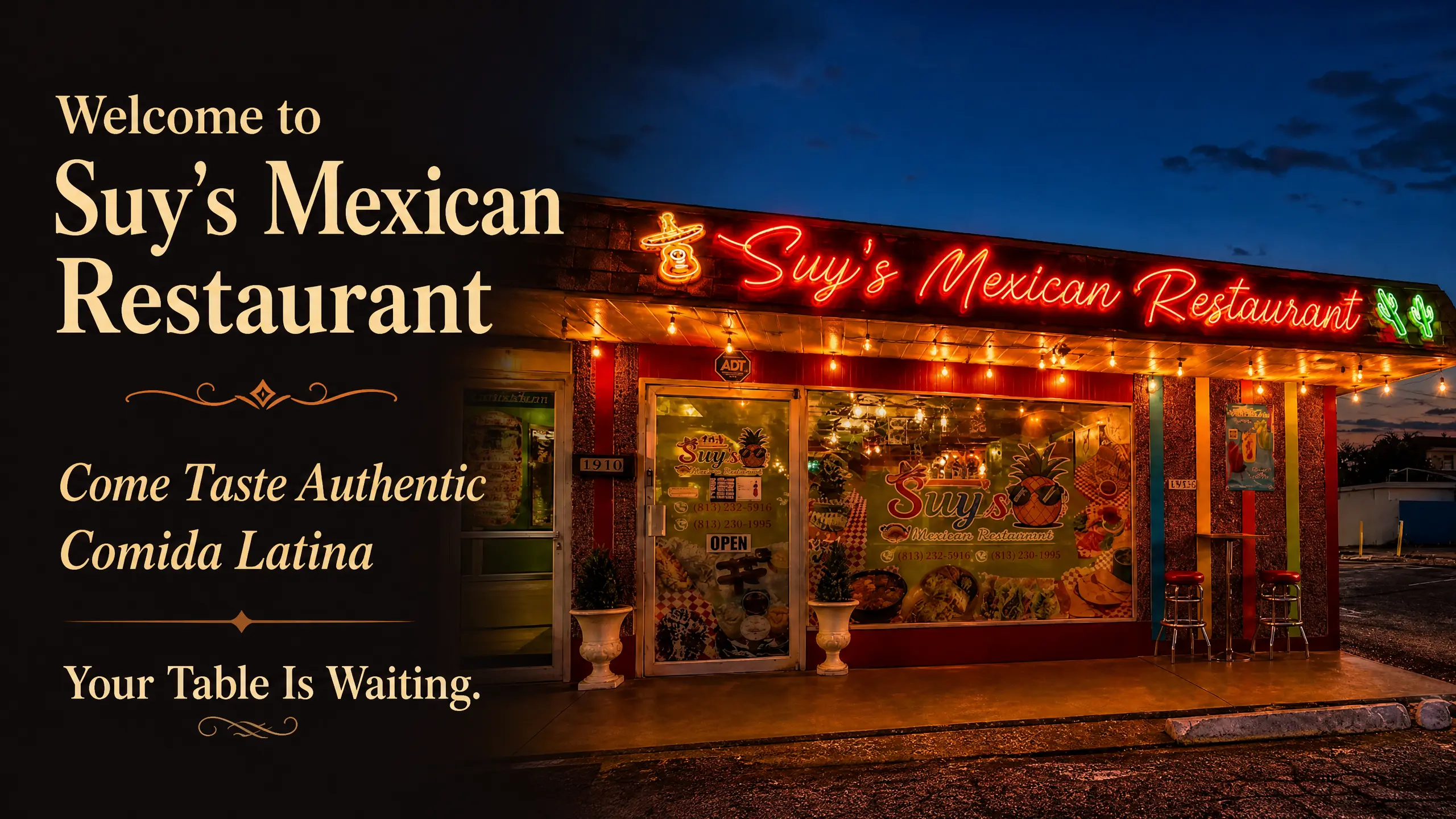
At Suy’s Mexican Restaurant, we invite you to come in and experience real Latin food culture firsthand. Our Caldo de Res and Caldo de Menudo carry the same care and respect for tradition that has always defined great Mexican cooking. Our fresh tortillas, well-seasoned rice, and vibrant fresh herbs are not afterthoughts. They form essential parts of the experience.
Maybe you love Mexican food and want an authentic experience. Or maybe you’re exploring Latin cuisine for the first time. Either way, we welcome you to our table. Our team is always happy to answer questions about our dishes, and to help you understand what makes each one special.
View our full menu for every dish we serve. For directions, hours, and any questions about visiting us, reach us through our contact page. We also invite you to learn more about our restaurant, our story, and our values on our about us page.
Come hungry. Leave satisfied. That is the promise of comida latina, and it is the promise we make to every guest who walks through our doors at 1910 W M.L.K. Jr Blvd, Tampa, FL.
Comida latina matters because food is culture, and culture is identity. When we eat traditional Latin food, we do more than nourish our bodies. We connect with thousands of years of human history. We also connect with the creativity of indigenous civilizations, and with the hard work of generations of cooks who kept these traditions alive.
Every bowl of Menudo holds a quiet conversation between the past and the present. A plate of rice and fresh tortillas becomes a small act of cultural memory. And a shared table of comida latina celebrates the values of community, warmth, and generosity that define Latin culture at its best.
At Suy’s Mexican Restaurant, we are proud to be part of this tradition. We are grateful to every guest who chooses to spend their mealtime with us. We also take seriously the job of representing Latin food culture honestly.
Comida latina is amazing. Come taste it for yourself at Suy’s Mexican Restaurant in Tampa.
 Offer
Offer
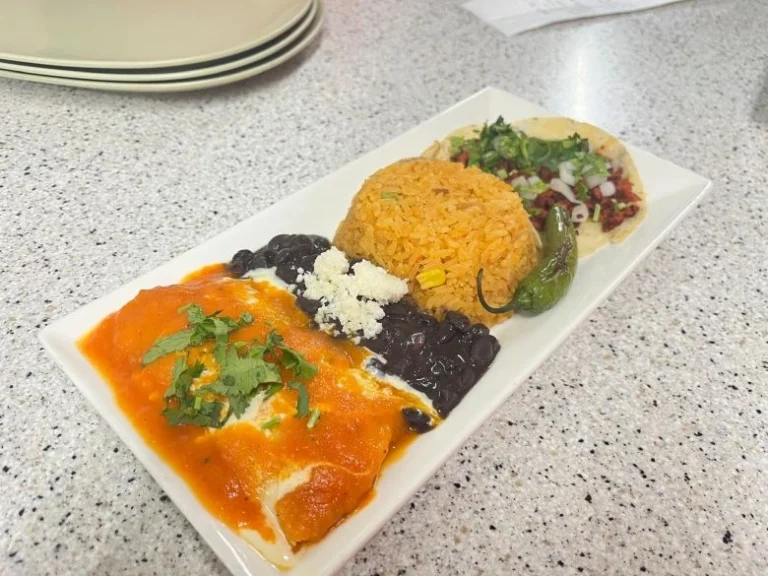 Lunch Special
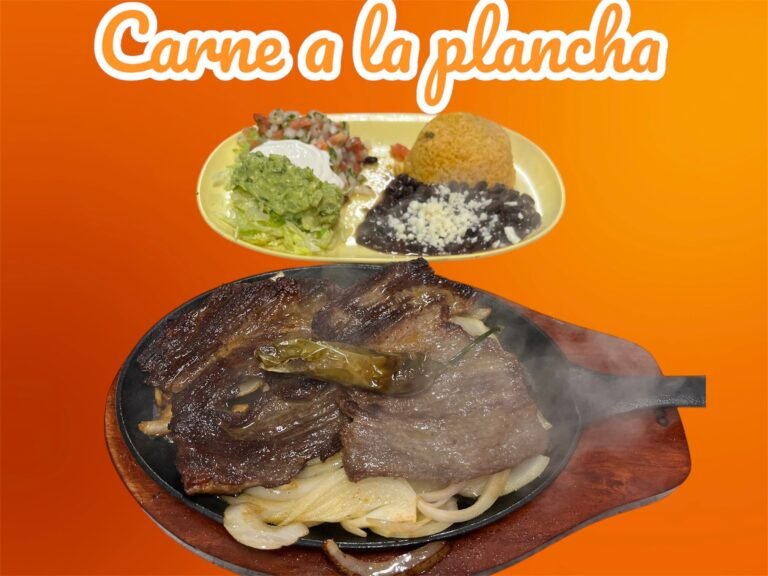 Featured
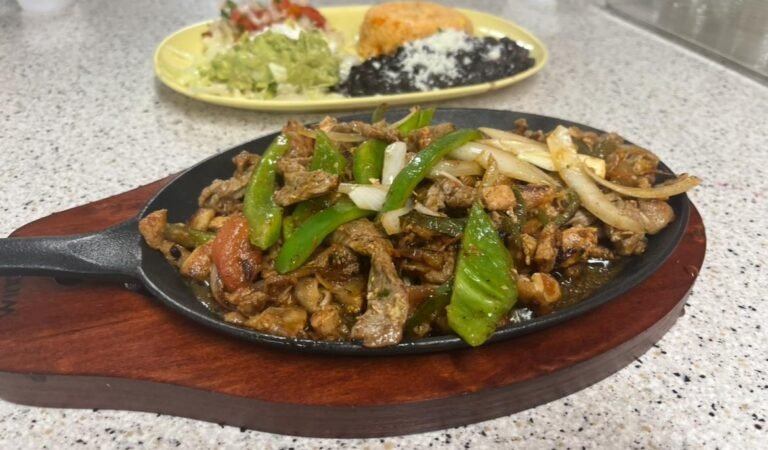 Popular
Buy 2 Tacos, Get 1 FREE — any filling, all day long