Oct 8, 2026
Ultimate 10+ Taco Toppings for the Perfect Taco Night in Tampa
The right toppings can turn a good taco into a memorable one. 10+ Taco Toppings for the Perfect...
Read More
Home › Street Tacos vs. Restaurant Tacos: What’s the Real Difference?
You have probably seen both on a menu. Street tacos appear in one column, while restaurant-style tacos sit in another. The prices differ, the descriptions differ, and the portions look nothing alike. But if someone asked you to explain exactly what separates one from the other, could you?
Most people cannot, and that is not their fault. The taco world is rich, regional, and often misrepresented by fast-food chains and Tex-Mex menus that blur the original lines. At Suy’s Mexican Restaurant in Tampa, we serve both styles and make everything from scratch every single day. As a result, we are in a solid position to break this down clearly and honestly.
This guide covers every real difference between street tacos and restaurant tacos — the tortilla, the filling, the cooking method, the toppings, and the overall experience. By the end, you will know exactly what to order and why it matters.
The term “street taco” gets used so often that it has lost some of its meaning. Walk into any fast-casual chain and you will find “street tacos” listed beside items that have nothing to do with the original dish.
A real street taco traces its roots to Mexico’s street food culture, where vendors sold small, quick, affordable tacos from carts and market stalls to workers, families, and anyone passing by. These tacos needed to travel well. In other words, a person had to eat them standing up, often in just a few bites. That practical requirement shaped everything about the way street tacos look and taste.
The result was something small, focused, and built around bold flavor with very little distraction.
This is the most visible difference between the two styles, and it is the best place to start.
Street tacos use small, soft corn tortillas — typically four to five inches across. Corn has been central to Mexican cooking for thousands of years, long before wheat arrived on the continent. As a result, the corn tortilla carries an earthy, slightly sweet flavor that complements grilled or braised meat without competing with it.
Restaurant tacos — particularly in the American-Mexican tradition — often use larger flour tortillas. Flour tortillas became common in northern Mexico after Spanish colonization introduced wheat farming, and they later crossed into Tex-Mex cooking across the southwestern United States. Because of their size and flexibility, flour tortillas work well for generous fillings that need more support.
Neither style is wrong. They are simply different tools built for different purposes.
One detail worth knowing: authentic street tacos almost always arrive double-stacked. Two corn tortillas per taco. The second tortilla acts as a backup if the first tears under the weight of the filling, and it also helps keep everything warm.
Street tacos center entirely on the protein. The meat is the star, and everything else supports it rather than covers it.
Traditional street taco fillings include carne asada (grilled marinated beef), al pastor (marinated pork slow-cooked on a vertical spit), carnitas (slow-braised pork), birria (slow-cooked beef or goat in a dried chile broth), and chorizo. Each filling is heavily seasoned and prepared using methods that build deep, layered flavor over time.
Restaurant-style tacos, on the other hand, offer more variety and room for creativity. For example, a full kitchen might feature slow-braised brisket, chipotle shrimp, chicken tinga, or grilled vegetables. The focus shifts from tradition toward exploration and personal preference. Chefs working with a full range of equipment have the time and tools to try combinations that a street cart simply cannot produce in volume.
At Suy’s Mexican Restaurant, our taco menu covers both worlds. You will find traditional carne asada alongside birria — one of the most popular taco styles in the country right now — as well as al pastor, shrimp, and chicken. Every protein is seasoned in-house and made fresh each morning.
Ask anyone who has eaten real tacos in Mexico and they will tell you the same thing: street taco toppings are minimal on purpose.
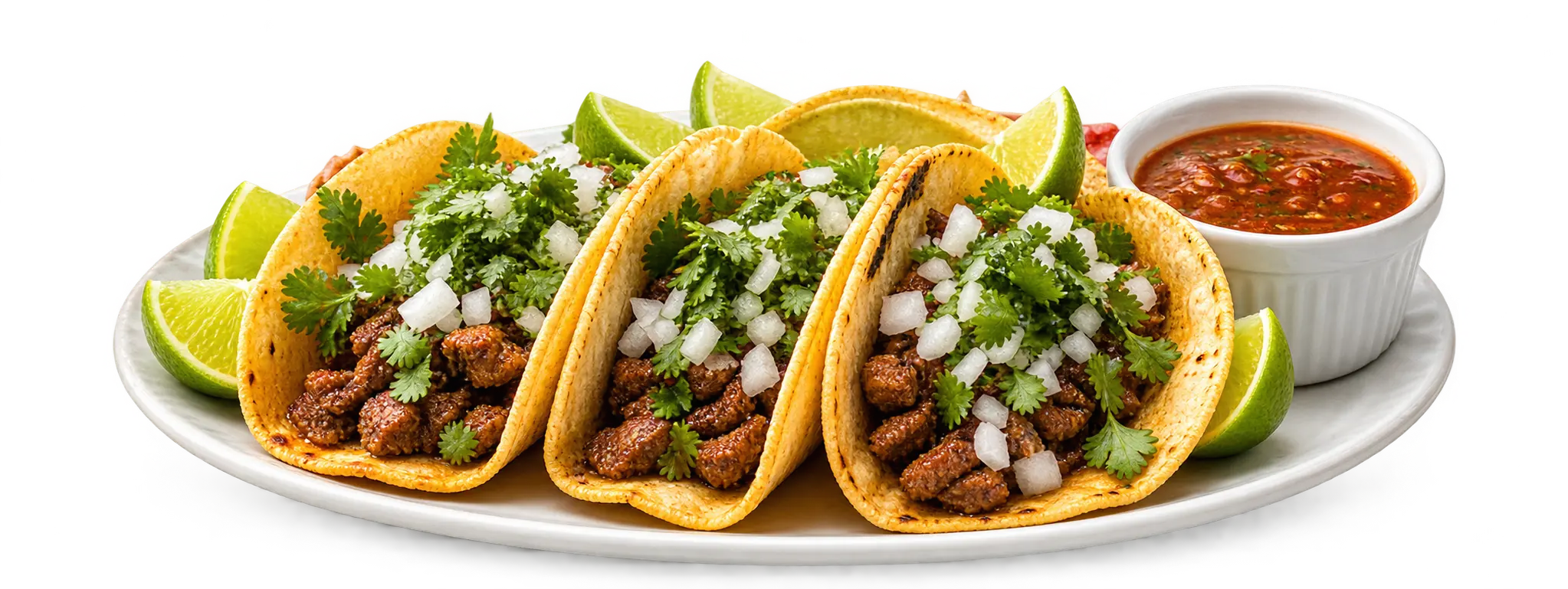
Fresh white onion, chopped cilantro, and a squeeze of lime make up the classic set. Sometimes a spoonful of house salsa gets added. That is it.
The restraint is intentional. Together, these three elements enhance the meat without hiding it. The onion adds a sharp, clean bite. The cilantro brings brightness and a fresh herbal note. Meanwhile, the lime cuts through the fat and pulls everything together. This is a carefully balanced system, not a matter of going without.
Restaurant tacos, by contrast, move toward abundance. Shredded cheese, sour cream, guacamole, pico de gallo, pickled jalapeños, and lettuce all give diners more control over flavor and texture. These additions also reflect the American taste for customization, which has shaped how Mexican food has changed over time in the United States.
Both approaches meet different needs. If you want bold, clean, traditional flavor, the street taco method wins. If you prefer a fully loaded meal with many layers of texture, restaurant-style toppings are the better fit.
Street tacos are cooked on a comal (a flat iron griddle), over an open flame, or on a vertical spit. The high heat creates caramelization, char, and a texture that a slow oven simply cannot produce.
Al pastor, for example, involves seasoned pork stacked on a vertical spit. As the pork cooks, thin slices get shaved off to order — a method brought to Mexico by Lebanese immigrants who introduced shawarma in the early twentieth century. Carne asada goes directly over high heat and develops its signature crust. Carnitas braises low and slow in its own fat, then gets crisped on the griddle at the very end.
Each method matches the filling it serves. In other words, the cooking approach is not an afterthought — it is the technique that gives each taco its defining texture and flavor.
Restaurant kitchens, however, have more flexibility. A full-service kitchen can grill, braise, fry, or slow-cook depending on what each dish needs. This wider range of equipment makes it possible to prepare fillings like slow-braised short rib birria that a street cart could not reasonably produce in high volume.
A single street taco was never meant to be a full meal. Street food culture in Mexico grew around variety and socializing — you try three, four, or five different fillings during one sitting and share the experience with people around you.
That is exactly why ordering three street tacos at a restaurant makes sense. You might get al pastor, carne asada, and birria in one order and compare all three back to back. The small size is a feature, not a shortcoming.
Restaurant tacos, in contrast, are built to fill a plate. They are larger, usually served alongside rice, beans, and other sides, and they function as a complete meal from start to finish.
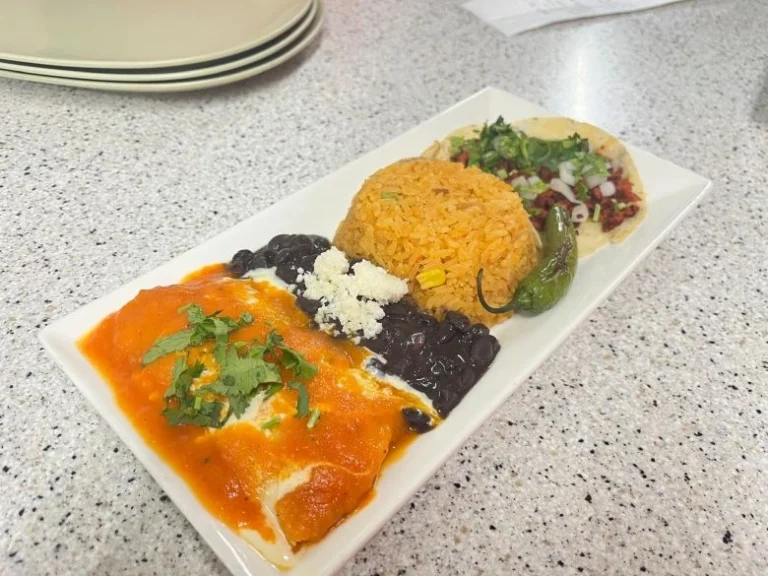
At Suy’s, our lunch specials include three tacos with rice and beans starting at $12.50 — a full meal at a price that is hard to beat in Tampa. Furthermore, every Tuesday we run our Taco Tuesday deal: buy two tacos and get the third one free, all day, with no restrictions on which taco you pick.
Street tacos were born in movement. You ordered them standing up, finished them in two or three bites, and kept walking. The experience was fast, social, and tied to a specific vendor and corner.
Restaurant tacos, however, come with a table, a full menu, and the time to sit and enjoy a proper meal. The setting adds a completely different layer to the experience. You can order a bowl of soup alongside your tacos, try a new drink, and take your time — none of which is possible at a street cart.
This difference does not make one experience better than the other. Instead, they serve different moments in your day and different needs in any given dining situation.
Most people who grew up eating American-style Mexican food are most familiar with flour tortillas. Tex-Mex chains built their menus around flour tortillas, and grocery store taco kits almost always include them as well.
However, if you want to understand why a street taco tastes the way it does, the corn tortilla is the key piece of context you need.
Corn tortillas behave differently from flour tortillas during pressing and cooking. They have less stretch, so they can tear if they get too thin or too dry — which is the main reason the double-stack tradition exists. More importantly, they carry a distinct flavor — slightly earthy, a little sweet, and genuinely satisfying — that flour tortillas simply cannot match.
When you eat a corn tortilla street taco loaded with proper carne asada and topped with fresh cilantro and onion, the flavors come together in a way that feels complete. Every component was designed to work alongside the others. Remove any one of them and the taco loses something real.
At Suy’s, we serve our tacos with fresh corn or flour tortillas made to order. The corn tortilla option is always available for anyone who wants the traditional street taco experience right here in Tampa.
Authenticity in Mexican food is a nuanced topic. Mexico has thirty-one states, each with its own regional cooking traditions, so what counts as “authentic” in Oaxaca differs from what that word means in Jalisco or Sonora.
That said, certain markers of authentic technique hold true across all regions:
First, the tortilla is made fresh or sourced daily from a trusted tortillería — not packaged, not microwaved, and not sitting on a shelf since the morning before.
Second, the meat is seasoned with real spices rather than a flavoring packet. Cooks prepare it using a method that builds actual texture and depth — grilled, braised, spit-roasted, or slow-cooked over time.
Third, the toppings are genuinely fresh. Raw white onion, fresh cilantro, and lime — not pre-chopped vegetables that have been sitting in a container since Tuesday morning.
Finally, the kitchen smells like it is actively cooking. That detail is not minor. In fact, it is one of the most reliable signs that something real is happening behind the counter.
You can read more about what separates truly authentic restaurants from the rest in our post on what makes a Mexican restaurant truly authentic.
Suy’s Mexican Restaurant is a family-owned restaurant at 1910 W. M.L.K. Jr Blvd in Tampa. We opened in 2024 with one clear goal: bring real Mexican flavor to Tampa using real ingredients made fresh every single day.
Our taco menu covers the full range. Carne asada, al pastor, birria, shrimp, and chicken — every taco arrives with fresh tortillas and house salsas made in our own kitchen. We use no shortcuts and no frozen proteins, because that is simply not how good food gets made.
Above all, we are known for our birria tacos — slow-braised beef in a rich dried chile broth, served in cheese-seared corn tortillas with a cup of consommé for dipping on the side. Birria sits at the crossroads of street taco tradition and full restaurant-level technique. It started as street food in the state of Jalisco and has since grown into one of the most talked-about Mexican dishes across the United States. Our version has earned a 4.9-star Google rating from more than 150 verified customer reviews.
Beyond tacos, we serve two traditional soups that complete a proper Mexican meal. Our beef soup is made from slow-cooked beef and arrives with fresh onions, cilantro, rice, and warm tortillas on the side. Our menudo is made with cow belly, simmered slowly in a seasoned broth until tender, and served the same way — with fresh onions, cilantro, rice, and tortillas. Both soups reflect the kind of cooking that takes real patience and real skill, and neither one is something you will find at a fast-casual chain.
You can view everything currently on our menu at the Suy’s full menu page.
The honest answer is simple: try both and let the experience guide you.
If you want something close to what a street vendor in Mexico City would serve you — small, focused, packed with one bold flavor and finished with onion, cilantro, and lime — order street tacos on corn tortillas. Choose three or four with different fillings so you can compare them.
If, however, you want a full sit-down meal with more topping variety and a generous portion that keeps you full through the afternoon, a restaurant-style taco plate with rice and beans is exactly right for you.
At Suy’s, you do not have to choose between the two. Our kitchen makes both styles well, and our lunch specials make it easy to explore the menu at a price that is fair every single day.
What is the main difference between a street taco and a regular taco? Street tacos use small corn tortillas, a single seasoned protein, and minimal toppings — traditionally onion, cilantro, and lime. Regular or restaurant tacos tend to be larger, often use flour tortillas, and come with a wider range of toppings and customization options.
Are street tacos always served on corn tortillas? Traditional street tacos almost always use corn tortillas. Some restaurants offer flour tortilla versions, but the original style calls for small corn tortillas that are typically double-stacked.
What toppings go on a street taco? Classic street taco toppings include chopped white onion, fresh cilantro, and lime. House salsa is also common. Cheese, lettuce, and sour cream are not traditional street taco additions — those toppings came from American-style Mexican cooking over time.
Where can I find authentic street tacos in Tampa, FL? Suy’s Mexican Restaurant on M.L.K. Blvd in Tampa serves fresh, authentic tacos made daily. Options include carne asada, birria, al pastor, shrimp, and chicken, all with house-made salsas and fresh tortillas. View the full menu or visit us at 1910 W. M.L.K. Jr Blvd, Tampa, FL 33607.
What is the best taco to try if I have never had street tacos? Carne asada or al pastor are both excellent starting points. They are traditional, widely available, and clearly show the flavor profile that defines authentic street tacos. If you want something more layered, birria is the top choice at Suy’s and adds a whole new dimension to the experience.
Does Suy’s Mexican Restaurant offer Taco Tuesday deals? Yes. Every Tuesday, Suy’s runs a Buy 2 Get 1 Free deal on any taco on the menu. The deal runs all day and covers both dine-in and takeout orders. Order tacos now.
Street tacos and restaurant tacos represent two expressions of the same great culinary tradition. One is built for speed and portability. The other is built for a full, satisfying sit-down experience. Both deserve respect when someone makes them well.
At Suy’s Mexican Restaurant in Tampa, we make both. We use the same fresh ingredients, the same care, and the same family recipes regardless of which style lands on your table.
Come visit us at 1910 W. M.L.K. Jr Blvd, Tampa, FL 33607. We are open every day from 11 AM to 9 PM. You can also browse our full menu and order online — your tacos will be ready when you are.
Oct 8, 2026
The right toppings can turn a good taco into a memorable one. 10+ Taco Toppings for the Perfect...
Read MoreSep 11, 2026
Every taco lover in Tampa has faced this moment. You are standing at the counter, the smell of...
Read MoreJun 11, 2026
Tacos come in more varieties than most people realize. Every region of Mexico developed its own style, its...
Read MoreMay 16, 2026
There is no single dish called “a taco.” There is al pastor, slow-rotisserie pork with pineapple and dried...
Read More Offer
Offer
 Lunch Special
 Featured
 Popular
Buy 2 Tacos, Get 1 FREE — any filling, all day long